
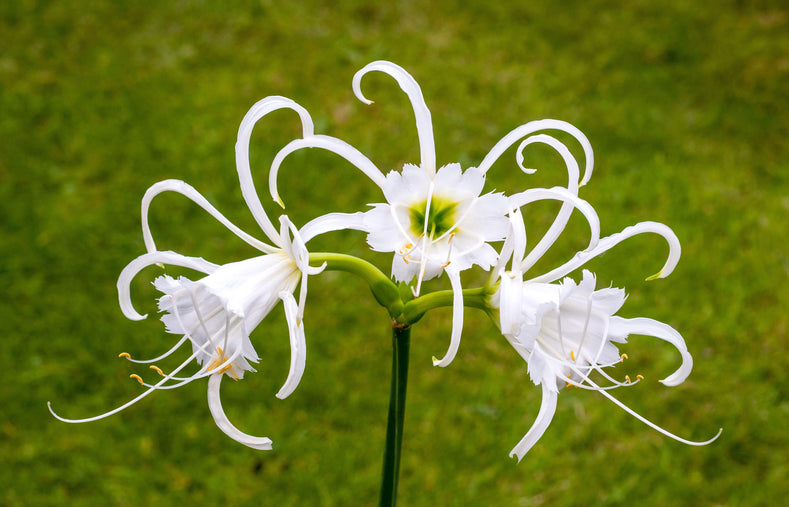
Hymenocallis is commonly called Peruvian daffodil or spider lily. It is grown from a bulb and produces fragrant, starry flowers with long narrow petals and a small cup in the center. Many types bloom in summer and look especially striking in pots, borders, and near patios where the fragrance can be enjoyed.
When to plant Hymenocallis roots:
Plant Hymenocallis in spring after the risk of frost has passed and the soil has started to warm. In much of the USA, that is mid spring to early summer depending on your region.
Where it grows best:
Choose full sun for the strongest flowering. In very hot areas, light afternoon shade can help keep plants looking fresh. Good drainage matters more than almost anything else. If soil stays wet, bulbs can rot.
How to plant Hymenocallis roots:
Loosen the soil and mix in compost if your soil is sandy or thin. Plant the bulb so the neck or tip sits at soil level or slightly above the soil surface. Space bulbs about 10 to 12 inches apart so clumps have room to expand.
Watering:
After planting, water well once to settle the soil. During active growth, keep soil lightly moist but never soggy. Once established, Hymenocallis can handle short dry spells, but it blooms best with steady moisture.
Feeding:
A balanced fertilizer during the growing season helps build a stronger plant and better flowering. Many growers feed every few weeks while the plant is actively growing. Stop feeding when growth slows at the end of the season.
Bloom timing and what to expect:
Hymenocallis typically blooms in summer, sending up sturdy stems with clusters of fragrant flowers. Some plants take a little time to settle in, so if the first season is light, that is normal.
After flowering:
Let the leaves keep growing as long as they stay green. The foliage feeds the bulb for next year. When leaves yellow naturally, you can cut them back and reduce watering.
Winter care in the USA:
Hymenocallis is commonly hardy outdoors in USDA zones 8 to 10. In colder zones, treat it as a tender bulb and lift it before freezing weather. Let bulbs dry, then store in a cool, dry, frost free place until spring.
Common problems and easy fixes:
No flowers: bulbs may be too deep or not getting enough sun. Keep the neck at soil level and give more light.
Soft bulbs or poor growth: soil is staying too wet. Improve drainage and water less often.
