
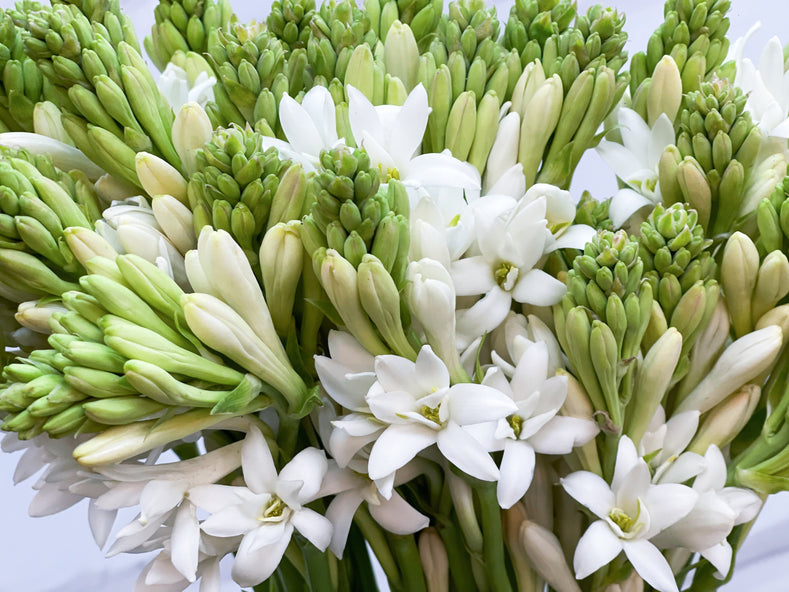
Tuberose is one of those plants that people remember. You catch the fragrance on a warm evening, turn your head, and there it is: a tall stem of waxy white or pink flowers that somehow smells creamy, fresh, and bold all at once. Botanically it is Polianthes tuberosa. Most gardeners still know it simply as Tuberose. This is a summer blooming bulb that acts more like a warm weather perennial. In the South it can come back year after year. In colder regions, you lift and store the bulbs just like you would with dahlias.
A quick history: from Mexico to gardens around the world
Tuberose is native to Mexico and has been cultivated for a very long time. It's not really known in the wild today, which is often explained as a result of long domestication. After European contact with the Americas, tuberose spread widely and became famous for fragrance. It was a prized plant in European gardens and later became a major flower crop in parts of Asia, especially for garlands, cut spikes, and fragrance extraction.
Fun facts gardeners actually like
The scent gets stronger at night. It lines up with the idea of attracting evening and night pollinators, which is why tuberose is a classic choice near patios and open windows.
It's a perfume legend
Tuberose has been used in perfumery for centuries and it's still one of the most recognizable white floral notes. The aroma comes from a complex mix of natural compounds.
Bigger bulbs matter
Tuberose is sold in different bulb sizes. Larger, mature bulbs are more likely to flower well the first season, while small offsets often need an extra year to size up. That is why we offer top sized bulbs. It's a real quality point for customers who want blooms in the same summer they plant.
What tuberose looks like in the garden
Expect upright, straplike leaves and a tall flower spike later in summer. Spikes grow around 2 to 3 feet tall, topped with clusters of tubular, starry white or pink blooms.
Tuberose comes in two common types
• Single flowering forms, often used for cut flowers
• Double flowering forms such as Tuberose 'The Pearl', grown for a fuller look
• Single flowering forms, often used for cut flowers
• Double flowering forms such as Tuberose 'The Pearl', grown for a fuller look

How to grow tuberose
-
When to plant tuberose bulbs:
Plant in spring after the danger of frost has passed. Tuberose wants warmth. In many areas, soil that has truly warmed up helps it take off faster. If you live where summers are short, you can start bulbs in pots indoors, then move them outside once nights are reliably mild. This can bring blooms earlier.
-
Sun and location:
Full sun is best for flowering. If you can, place it where you will actually smell it. Along a walkway, near a deck, beside a bench.
Soil and drainage:
Tuberose likes soil that drains well but does not bake dry for weeks on end.
-
Good setup:
-
Planting depth and spacing:
Plant about 2 inches deep depending on your soil and local practice. Space about 6 to 8 inches apart.
Tip: In heavier soils, stay on the shallower side. In very light sandy soil, you can go a touch deeper.
-
Watering:
Water after planting, then keep moisture consistent while it is actively growing. Let the top layer of soil dry slightly between waterings. When leaves begin to yellow later in the season, reduce watering as dormancy approaches.
-
Feeding:
If your soil is decent, a light feeding is enough. Mix compost into the bed before planting and use a balanced slow release fertilizer when growth starts. Avoid heavy nitrogen, which can push leaves at the expense of flowers.
-
Bloom time:
Tuberose is not instant. It needs a long warm runway. Flowering roughly 3 to 4 months after planting under good warm conditions, with late summer being the typical show in much of the US.
-
Overwintering tuberose bulbs:
Where it can stay in the ground:
Tuberose are overwintering outdoors in USDA Zones 8 to 10
Lifting and storing in colder zones:
Lifting and storing in colder zones:
If you get hard freezes, lift and store.
• After bloom season, let foliage yellow naturally
• Once it dies back, lift the clumps
• Dry them in a sheltered spot out of rain
• Store in a cool, dry place protected from freezing
• Store around 50 F for safety, and storing in a dry medium like peat or vermiculite can help prevent shriveling In spring, replant the largest bulbs. Divide clumps every few years so you do not end up with lots of tiny offsets and fewer flowers.
-
Growing tuberose in pots:
Containers work extremely well, especially if you want fragrance close to the house.
Container tips:
• Use a pot with drainage holes
• Use a free draining potting mix
• Plant bulbs at the same depth as in ground
• Water thoroughly, then let the pot drain
• Full sun is still the goal
• If you are in a cold zone, move the pot indoors before frost, or lift and store the bulbs
-
Cutting tuberose for vases:
For cut spikes, harvest timing matters. We recommend cutting when the lowest flowers are just opening so the rest continue to open in the vase.
Quick cut flower tips
• Cut early morning
• Use a clean sharp pruner
• Strip leaves that would sit below the water line
• Refresh water often
-
Why top sized tuberose bulbs make a difference:
You want tuberose for the flowers and fragrance, not for a nice clump of leaves. Since mature bulbs are the ones most likely to bloom strongly in year one, we only offer top sized Tuberose bulbs.
