Centaurea
Centaurea: The Timeless Wildflower Charm for Every Garden
Centaurea, also known as “Knapweed”, “Star Thistle”, or “Bluet”, brings a confident sweep of beauty to your landscape, offering a sense of effortless elegance that has defined sophisticated gardens for generations. With their linear, fringed petals and enchanting blooms, they create a captivating display, perfect for US gardeners.
Whether you are looking to anchor a traditional border or create a vibrant meadow, our premium Centaurea collection provides the vigor and reliability your garden deserves. Discover our collection of premium bare roots today to bring lasting character and a professional touch to your outdoor space.
Showing 1 - 2 in 2 items
Centaurea
What is Centaurea? The Spirit of the Summer Meadow
Centaurea is a diverse genus comprising over 700 species of herbaceous, thistle-like flowering plants within the Asteraceae family. While often recognized by common names such as “Cornflower”, “Knapweed”, “Bluet”, or “Star Thistles”, these plants are prized in cultivation for their unique, fringed blooms.
The name Centaurea derives from Greek mythology, specifically from the centaur Chiron. Today, this native of continental Europe has become a global favorite, cherished for its architectural stems and historical significance. Fun fact: Estonia's national flower is Centaurea “Cyanus”, which symbolises the country's natural beauty and cultural heritage.
Why Gardeners Love Centaurea: Key Characteristics
Gardeners choose Centaurea flowers for their high-impact visual appeal with remarkably little complication. These plants produce a wide variety of blooms, ranging from intense black and deep violet to bicolour tones, and grow to a height of up to 20 inches. While the common Cornflower is an annual plant, there are also perennial species of Centaurea that come back year after year.
Beyond their beauty, Centaurea species are ecological powerhouses. They are copious nectar producers, making them attractive to beneficial insects, bees, butterflies, and day-flying moths. By planting Centaurea, you create a garden that is truly alive, supporting local biodiversity while enjoying a low-maintenance display.
What Is the Bloom Time for Centaurea?
Centaurea flowers typically bloom from late spring through late summer, with peak activity occurring between May and July. To extend this display, you should deadhead spent flower heads regularly. This practice not only encourages the plant to produce additional buds but also helps limit self-seeding if you prefer a more controlled landscape.
What Are the Growing Conditions for Centaurea?
Centaurea is easy to grow when provided with full sun or partial/dappled shade and well-drained soil. While they prefer average, medium moisture, they are notably drought-tolerant once they reach maturity. These plants are hardy in USDA Zones 3-9, making them suitable for different garden styles in the US.
From Cottage Borders to Cutting Gardens: Who is Centaurea For?
If you appreciate the relaxed, romantic aesthetic of cottage gardens or the wild movement of meadows, Centaurea belongs in your collection. Its growth habit and airy texture make it a perfect companion for ornamental grasses and other native perennials in naturalistic designs.
You should grow Centaurea if you:
- Want to grow colorful plants in containers.
- Aim to design cutting gardens with long-lasting, unique flower shapes.
- Need deer-resistant selections for gardens near wooded areas or open fields.
- Wish to support pollinators and birds that feed on the seeds in late summer.
Varieties: From Centaurea Montana, Centaurea Nigra to Centaurea Cyanus
With such a wide variety of Centaurea, you are sure to find a type that suits your garden style and preferences. Whether it is Centaurea “Nigra” or Centaurea “Cyanus”. The following varieties are available at DutchGrown:
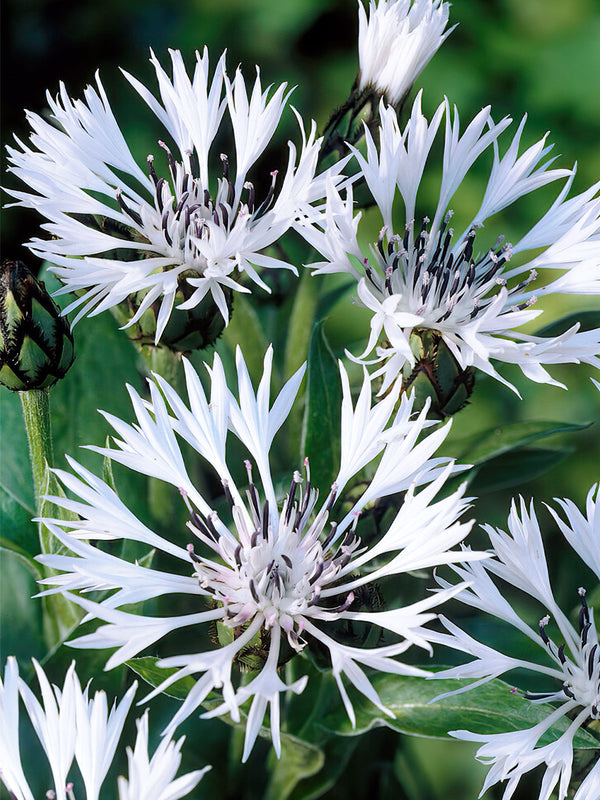
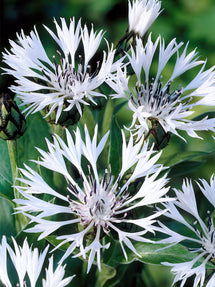
- Centaurea “Montana Alba”: This variety grows into a dense mat of grey-green leaves and produces clusters of white flowers that are occasionally tinged with pink.
- Centaurea “Black Sprite”: These buds gracefully unfurl to reveal large, dark purple flowers with a reddish hue.
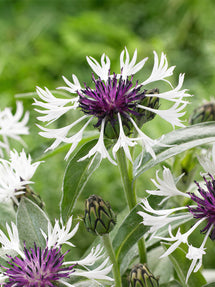
- Centaurea “Amethyst in Snow”: Introducing the first bicolour cultivar of its kind: Amethyst in Snow. Its flowers boast a striking contrast with deep purple centres and pure white tubular petals.
- Centaurea “Pulchra Major”: Its large buds unfurl to reveal delicate flowers in soft pink and violet hues.
Growing Success: Tips for a Flourishing Display of Centaurea Flowers
To ensure your Centaurea bare roots thrive, you can follow the steps below:
- Time: Plant Centaurea in the spring once the threat of frost has passed.
- Location: Choose a spot with partial or dappled shade, or full sun.
- Soil: Prepare the soil by loosening it to a depth of 4 inches and mixing in compost or well-rotted manure to improve fertility and drainage.
- Position: Dig a hole deep enough to accommodate the roots without bending them, and space your plants approximately 6 to 12 inches apart.
- Water: Water well immediately after planting to settle the soil. While Centaurea is drought-tolerant once established, providing consistent moisture during the first growing season helps develop a deep, healthy root system.
- Mulch: Apply a layer of mulch around your plants to help conserve moisture and prevent weeds.
- Prune: Remove spent flowers to prevent seeding and to promote new flowers.
Buy Top-Quality Centaurea Bare Roots at DutchGrown
When you choose Centaurea from DutchGrown, you are investing in over a century of Dutch horticultural expertise. We focus on providing the finest, top-sized bare roots that offer superior performance in the US garden.
Discover our Centaurea bare roots collection today and experience why we are one of the most respected exporters in the Netherlands; we ship our premium bare roots directly to your door throughout the United States.
Frequently Asked Questions About Centaurea
Is a Centaurea Plant a Perennial or an Annual?
Centaurea species can be either perennials or annuals, depending on the specific variety you choose. While the popular Centaurea “Cyanus”, known as the annual Cornflower, completes its life cycle in one season, other favorites like Centaurea montana are hardy perennials that return each year faithfully.
Is Centaurea Invasive?
Some Centaurea species become invasive when introduced to non-native regions. Certain varieties can spread aggressively in landscapes because they tend to dominate ecosystems under favorable conditions. Choose well-behaved, cultivated varieties and use deadheading to prevent unwanted self-seeding.
Is Centaurea the Same as Cornflower?
Centaurea is the botanical name for the entire genus, while Cornflower is the common name used for its most famous members, specifically Centaurea “Cyanus”. The genus is diverse, containing over 700 species.
Does Centaurea Spread Quickly?
Centaurea can spread quickly through both underground rhizomes and self-seeding. Some species form dense colonies. To manage this growth, you should perform plant division every two to three years and deadhead spent flower heads to prevent unwanted spread across your garden.