
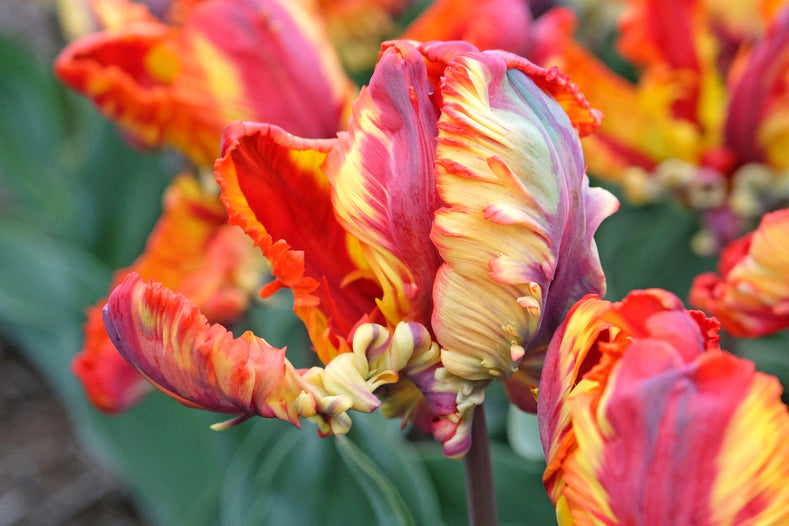
If you've ever seen a parrot tulip in person, you already know there's nothing quite like it. These spring bloomers are completely unmistakable, their petals are fringed, feathered, and twisted in ways that look almost sculpted. The colors are rich, the shapes are dramatic, and the whole effect is one of movement and texture that most flowers simply can't pull off. It's no surprise that floral designers reach for them whenever they want to make a real statement. Whether you're putting together a bold spring bouquet or just looking to add some personality to your garden, parrot tulips deliver every time. Read on for everything you need to know about them.

What Are Parrot Tulips, and Where Do They Come From?
Tulips have been winning over gardeners and florists for centuries, and within that already impressive family, parrot tulips occupy a league of their own. Their scientific name is Tulipa gesneriana, and they belong to the Liliaceae family. They trace their roots to the mountainous regions of Central Asia and were first cultivated in the Ottoman Empire during the 18th century. They were a big deal during the Dutch Golden Age, collectors paid extraordinary sums for them, and they've never really fallen out of fashion. Today they're grown all over the world, and it's easy to see why. The name "parrot tulip" comes straight from their appearance: those ruffled, layered petals genuinely do look like a parrot's feathers. Once you make that connection, you can't unsee it.
What Makes Parrot Tulips So Distinctive
The most obvious thing about parrot tulips is their structure. Where a standard tulip is smooth and symmetrical, a parrot tulip is anything but, the petals curl, ruffle, and flare in unpredictable directions, with irregular edges that give them a wild, almost handmade quality. Colors run the gamut from deep crimson and burnt orange to buttery yellow and soft blush, often with streaks or two-toned patterns thrown in for good measure. Size-wise, they can vary quite a bit. Some cultivars produce big, showy blooms; others are more delicate. Plant height typically falls somewhere between 16 and 22 inches, which gives you flexibility depending on where you want to use them in the garden.

Why People Consider Them Among the Most Beautiful Tulips in the World
It's not just the unusual petals, though those certainly help. Parrot tulips have this quality of looking slightly unpredictable, even within a single variety. The color combinations shift in ways you don't always expect, and the texture gives arrangements a depth that smoother flowers can't match. They've also picked up symbolic weight over the years: like other tulips, they're associated with love and beauty, but their bolder, more unconventional look has made them a natural symbol of individuality and standing out from the crowd. There's something almost defiant about them, in the best possible way.

How to Use Parrot Tulips in Arrangements
These tulips were practically made for floral design. A few ways to put them to work: Let them stand alone. Sometimes the best move is the simplest one. A handful of parrot tulips in a clean vase is genuinely striking, the variation in color and texture across the blooms does all the work for you. Pair them with complementary flowers. They mix beautifully with roses, ranunculus, and anemones. The contrast between parrot tulips' ruffled petals and smoother blooms adds visual depth and keeps the arrangement from feeling one-note. Use them for texture. The frilly, irregular edges of parrot tulips create a natural contrast against sleeker flowers and foliage. That interplay of textures is what gives a mixed arrangement a sense of richness. Play with color. Whether you go monochromatic or mix things up with a range of hues, parrot tulips are flexible enough to anchor almost any color story. They tend to be the focal point that everything else orbits around. With good care, they also hold up well as cut flowers, you can typically expect several days of vase life.

Caring for Parrot Tulips in Your Garden
They're not especially fussy, but a little attention goes a long way. Planting: Pick a spot with well-draining soil and plenty of sun. Plant bulbs in the fall, about 6-8 inches deep and 4-6 inches apart. Good air circulation helps prevent fungal problems. Watering: Water thoroughly after planting to settle the soil. During the growing season, keep the soil evenly moist, but not soggy. Water deeply when the top inch of soil feels dry, particularly during dry stretches. Fertilizing: As new growth appears in early spring, apply a balanced fertilizer made for flowering bulbs. Follow the label for amounts. Don't overdo it, too much fertilizer pushes leafy growth at the expense of blooms. Mulching: A layer of organic mulch around the base of the plants conserves moisture, keeps weeds down, and helps stabilize soil temperature. Deadheading: Snip off spent blooms promptly with clean, sharp pruners. This keeps the plant focused on flowering rather than seed production and tidies things up considerably. Foliage care: Once the flowers fade, leave the leaves alone until they yellow and die back on their own. The foliage feeds the bulb, storing energy for next year's blooms. Cutting it back early weakens the plant over time.
Common Questions
What sets parrot tulips apart from other tulips?
Their fringed, feathered, ruffled petals and unpredictable color patterns give them a look that no other tulip variety can match. They're in a category of their own.
When do they bloom?
Late spring, typically around May, making them a natural fit for spring gardens and seasonal arrangements.
Are they good as cut flowers?
Absolutely. Their bold colors and textures make them natural focal points in bouquets and centerpieces, either on their own or alongside roses, ranunculus, or anemones.
Where do they come from originally?
Central Asia, with early cultivation in the Ottoman Empire during the 18th century. They became hugely popular during the Dutch Golden Age and are now grown worldwide.
