
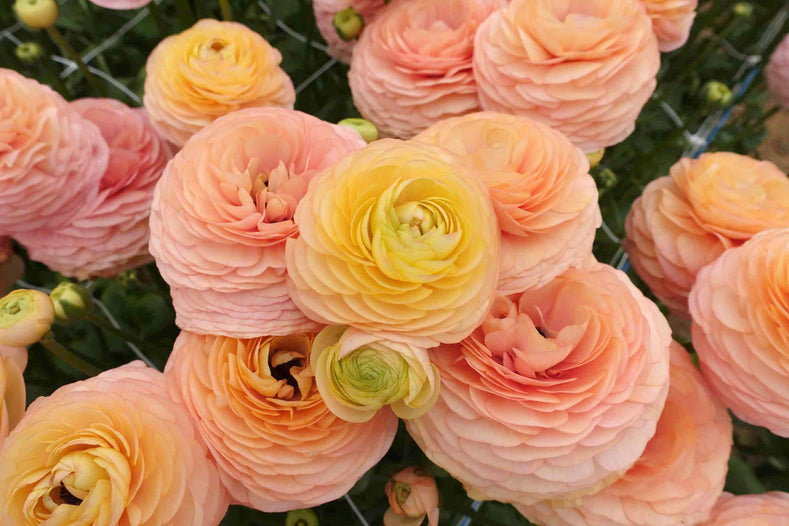
If you've been around the cut flower world for any length of time, you've probably heard growers and designers talk about Romance ranunculus like they're something special. They are. Here's everything worth knowing about this premium series and why it's become such a go-to for flower farmers, gardeners and florists alike.
Where the Series Comes From
The Ranunculus Romance™ series comes from Japanese breeder Aya Engei, AYA ENGEI Co., Ltd., and is known for its very large flowers, long and strong stems, and good vase life. The varieties are vegetatively propagated Italian clones developed for premium cut flower production, patent-protected and lab-propagated through tissue culture, a process that is expensive and labor-intensive, taking three years, but the result is disease-free, florist-grade flowers with large blooms and long stems.

What Sets the Romance Series Apart
The defining qualities of this series are consistent across every variety: Romance™ ranunculus varieties have huge, richly layered double blooms with very high petal counts. They present a high degree of uniformity and a streamlined plant habit with fewer leaves emerging from the flower stems, making them more efficient to harvest and a high-quality product overall. Plants yield multiple stems per plant and branch naturally without pinching. Unlike most ranunculus, the plants have solid stems, which makes them more resistant to disease. They also produce less foliage than other varieties, leading to better airflow and a decreased risk of fungal diseases like powdery mildew. Each corm produces multiple branching stems with five to ten blooms, and stems can grow close to two feet when healthy. The high-end blooms have incredible vase life and grow on long, strong stems built for bouquets. Expect around 10 days in the vase when properly handled.
The Varieties
The Romance series covers a beautiful range of colors and moods:
Ferrand: A strong, full ranunculus with a soft blush pink color and a long shelf life, a real eye-catcher and a valuable addition to any assortment.
Gascogne: One of the newer additions to the Romance lineup from AYA Engei. Availability has been growing quickly as growers increasingly seek it out.
Hydra: A sweetheart variety with a creamy yellow color that shifts to a more pinkish tone toward the edges as it opens. Subtle and refined, it reads as elegant rather than loud.
Maritime: A truly beautiful ranunculus with very large, soft pink flowers that start with a creamy yellow color and change to a soft pink as they develop, becoming even more deeply pink in warmer conditions. Stem length is exceptional, with strong stems frequently reaching around 30-35 inches.
Montenvers: An elegant variety with large, pure white flowers and a subtle green center when opening, combining vigor, length, and rich flowering with a fresh, stylish appearance. A go-to for bridal and high-end event work.
Nohant: These huge blooms begin salmon and fade to pale champagne, more peach than pink, with a vintage warmth that's perfect for soft, romantic bouquets. Very productive and generous with stems.
Orleans: A lovely pink and cream cut flower, ideal for wedding floristry work. Its soft, blended tones make it an easy mixer in bouquets and arrangements.
Salerno: Slightly later to flower than some of the other varieties in the Romance series, with 3-4 inch wide peachy-salmon blooms. Worth the wait for that warm, summery color.
Seine: A productive variety with light pink 3-4 inch wide blooms. Beautiful and classic and consistently one of the most requested by florists for bridal work.
How to Grow Them
Romance ranunculus are a cool-season crop that genuinely does not like heat. They grow best in cool, moist, well-drained soil with an ideal pH of 6. Plant height and stem length typically reach 14-24 inches. Space corms 6-8 inches apart within rows and 8-10 inches apart between rows. Flowering typically runs from January through April depending on location, with a crop time of 8-12 weeks growing and 10 weeks flowering. Temperatures consistently above 70°F may trigger dormancy in the plants, resulting in a shorter harvest window and a decline in bloom quality. In most of the US, that makes them a tunnel or greenhouse crop unless you're in a mild-winter region. In USDA hardiness zones 7 and greater, they can perennialize and be grown outdoors. One thing to know going in: Romance corms are chunky, and pre-sprouting takes longer than other ranunculus types, allow 3-4 weeks for sprouting before transplanting. The massive blooms and sturdy stems are worth the wait.
When and How to Harvest
Timing the harvest makes a big difference with Romance varieties. Cut blooms at the "marshmallow stage", once they've colored up and feel springy like a marshmallow but before they fully open. For maximum bloom size, allow the flowers to open and close for three days before harvest. Use a knife or snippers to cut the stem at ground level, never pull the stems from the bulb, as this can damage the plant. The harvest window is typically 2-4 weeks depending on conditions. Store cut stems in cold water at 34–40°F until use.
Bottom Line
If you're a gardener, flower farmer growing for markets, wedding clients, or wholesale florists, the Romance series is hard to beat. The stem quality, bloom size, color range, and vase life check every box. The trade-off is that they require controlled growing conditions, a cool environment, and a bigger upfront investment in corms, but for growers who get the conditions right, the results speak for themselves.
