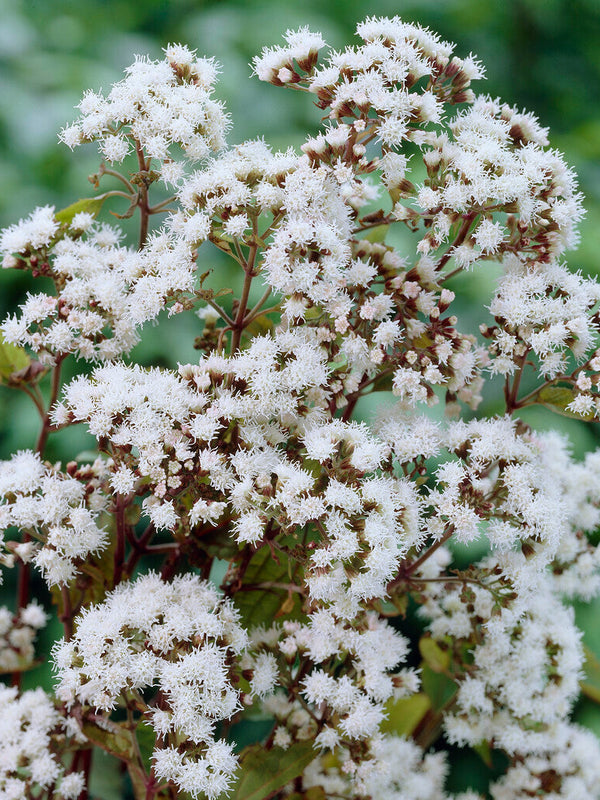
Eupatorium
What Is Eupatorium? The Late-Summer Giant of the Border
Eupatorium is the architectural beauty your late-summer garden needs. Often referred to as Joe Pye weed, these plants provide a sophisticated structural element to borders while serving as a vital sanctuary for local wildlife.
At DutchGrown, you can find top-quality Eupatorium bare roots that help your garden shine. Whether you want to fill a damp corner or create a pollinator-friendly backdrop, our curated selection of Eupatorium is ready to transform your landscape. Explore our collection and place your plant orders to secure these garden icons for the coming season.
Showing 1 - 3 in 3 items
Eupatorium (Joe-Pye Weed)
Joe Pye weed, Boneset, or Thoroughwort
Eupatorium is a genus of flowering herbaceous perennials in the Asteraceae family, primarily native to North America. The common name for Eupatorium depends on the species, but you will most often hear them called “Joe Pye weed”, “Joe Pye”, “Boneset”, or “Thoroughwort”. While the genus has seen some recent reclassification, with many species moving to Eutrochium, most gardeners and nurseries still recognize them under the historic Eupatorium name.
Bold, Bronze, and Butterfly-Friendly: Key Characteristics of Eupatorium
The most striking feature of Eupatorium is its impressive scale, with wide varieties reaching between 4 and 7 feet tall. The plants are tall, with large, fluffy flower heads that make your US garden shine. The plant has lance-shaped, sometimes whorled leaves that can be quite large and are usually deep green. The flowers are generally fluffy or fuzzy in appearance, creating a cloud-like effect. They are also ecologically essential. Joe Pye weed is irresistible to butterflies, while the hundreds of individual flowers in each cluster provide a rich nectar source for bees and other pollinators.
From Meadow to Masterpiece: Is Eupatorium the Right Plant for You?
You might wonder whether Eupatorium is the right option for your garden, or whether you would be better off choosing another flowering plant. Eupatorium is used for:
- Rain Gardens: Their love for moisture makes them perfect for managing runoff.
- Pond Edges: They thrive in the wet soil found near water features.
- Pollinator Borders: They serve as central hubs for butterflies and bees.
- Naturalized Meadows: They provide height and structure in wilder garden designs.
Eupatorium pairs well with other moisture-loving plants such as Astilbe, Iris, and Swamp Milkweed, and can also provide a nice backdrop to lower-growing perennials.
Explore the Varieties: From Eupatorium Maculatum to Eupatorium Perfoliatum
Choosing the right species ensures your garden thrives. Eupatorium maculatum, or Spotted Joe Pye weed, is perhaps the most famous, known for its bright pink flowers and significant height. If you prefer white flowers, Eupatorium perfoliatum, commonly known as boneset, is a wonderful alternative.
At DutchGrown, you can buy the following varieties:
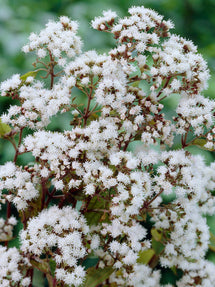
- Eupatorium “Chocolate”: This striking perennial forms clumps, showcasing beautiful chocolate-coloured leaves atop upright stems.
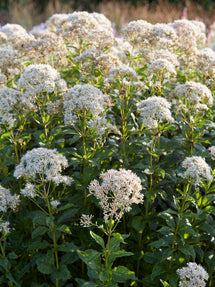
- Eupatorium “Snowball”: This variety features large, domed clusters of small white flowers that create a stunning, frothy-looking display, perfectly contrasted by the heart-shaped foliage below.
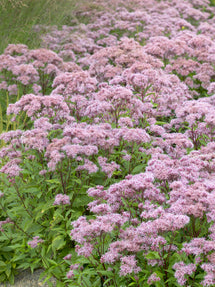
- Eupatorium “Purple Blush”: Forming an erect clump of stems, this captivating perennial boasts purplish-pink flowers and reaches an impressive height of 60-80 inches.
Planting for Success: How to Grow and Care for Eupatorium
To fully enjoy the beauty of Eupatorium, ensure you follow the correct steps for planting, care, and the conditions it requires:
- Time: Plant bare roots in the spring, once the danger of the last frost has passed.
- Location: These plants prefer full sun to partial shade and thrive in moist, fertile soil. They are particularly well-suited to wet areas, such as near ponds or streams, but can adapt to regular garden soil if kept adequately watered.
- Depth: Dig a hole and plant each bare root 1 inch deep, right below the surface.
- Water: Once planted, water thoroughly and maintain consistent soil moisture, particularly during the first year.
- Stake: Eupatorium may benefit from staking in particularly windy areas or when planted in richer soils, where they might grow taller and become more prone to flopping over.
- Deadhead: Deadheading the spent flowers can encourage a second bloom and prevent self-seeding.
Buy Premium Eupatorium Roots at DutchGrown
When you invest in your garden, the quality of the starting material is paramount. At DutchGrown, we have Eupatorium and Joe Pye weed for sale. You can find top-sized bare roots. With generations of expertise, we understand the specific needs of US gardeners and ensure our shipping is timed perfectly for your growing zone.
Enhance your landscape with the timeless beauty of Eupatorium. Select your favorite varieties from our collection and experience the difference that expert sourcing brings to your garden. We ship throughout the US.
Frequently Asked Questions About Eupatorium
What Is the Common Name for Eupatorium?
The most common name for Eupatorium is “Joe Pye weed”. Depending on the specific species, it is also frequently called “Boneset” or “Thoroughwort”. These hardy native perennials are easily identified by their towering stems and frothy clusters of nectar-rich flowers that attract a wide variety of pollinators to the summer garden.
Does Eupatorium like Sun or Shade?
Eupatorium thrives best in full sun, though it can tolerate partial shade. While many species require at least six hours of direct light to maintain strong, upright stems, some varieties are more flexible. For the best results, ensure they are planted in moist, consistently moist soil, as this allows them to flourish even in brighter, warmer locations.
What Is Eupatorium Used For?
Eupatorium is highly valued in landscaping for supporting pollinators and is a staple in rain gardens and riparian borders because it thrives in moist soil. These plants provide essential architectural structure and summer color to garden borders and pollinator gardens.